Key Takeaways
- AI adoption among B2B marketers is now nearly universal, but only about a third say it has actually improved their results.
- The teams getting real value use AI to remove specific bottlenecks, not to run marketing on their own.
- The strongest use cases today are research and synthesis, first drafts and repurposing, and routine analysis and reporting.
- AI creates busywork when it produces more output than a team can review, use, or act on.
- The practical way in is one slow, repeatable workflow at a time, with a person still accountable for judgment and quality.
Article at a Glance: B2B companies are using AI to expand what a small marketing team can produce without adding headcount, mostly by compressing research, first drafts, content repurposing, and routine reporting. Surveys in 2026 show that around 95 percent of B2B marketers now use AI in at least one part of their workflow, yet only about 39 percent say it is improving performance. The gap is almost always about how AI is applied rather than which tool is chosen. Value comes from pointing AI at a specific, repeatable task that currently slows the team down, keeping a human accountable for strategy and quality, and measuring the time actually recovered. AI is a leverage layer on top of experienced marketing judgment, not a replacement for it.
What “Doing More Without Hiring More” Actually Means
Most growing B2B companies face the same squeeze. The number of people involved in a buying decision keeps climbing, with enterprise buying committees now averaging more than a dozen stakeholders by several 2026 estimates, while the marketing team stays the same size. More segments, more stakeholders, and more channels need to be served by the same two or three people.
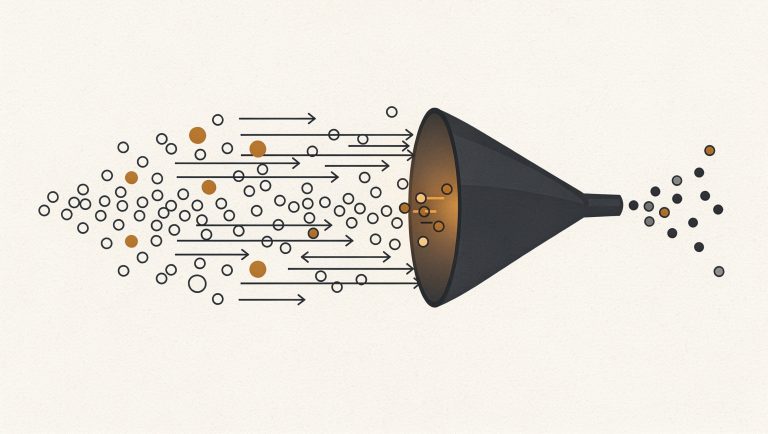
Used well, AI closes part of that gap. A single experienced marketer can now research a topic, produce a solid first draft, adapt one asset into five formats, and pull together a monthly performance summary in a fraction of the time those tasks used to take. That is what “doing more without hiring more” looks like in practice. It is not a machine running your marketing. It is a smaller team spending a larger share of its hours on the work that requires human judgment.
It is worth being precise about the claim, because the market is full of overstatement. AI is not going to set your strategy, own your positioning, or replace a senior marketing leader. What it can do is take a meaningful amount of the manual load off the people who do those things.
Where AI Is Actually Saving B2B Teams Time
When B2B marketers are asked what AI is doing for them, the consistent answer is efficiency. Recent surveys put improved efficiency as the single most cited benefit, ahead of creativity or personalization. Three categories of work account for most of that gain.
Research and synthesis
Pulling together what is known about a topic, a competitor, or an audience segment used to take hours of reading. AI compresses the first pass of that work, producing a structured summary a marketer can then verify and build on. The judgment about what matters still belongs to the person, but the blank-page phase is much shorter.
First drafts and repurposing
A single skilled marketer can now produce draft content that previously required a writer, an editor, and a longer timeline. The bigger gain is often repurposing. One well-developed article can become a set of social posts, an email, a short video script, and a slide outline in one working session instead of several.
Routine analysis and reporting
Monthly reporting, campaign recaps, and first-level data analysis are repetitive and structured, which is exactly where AI is dependable. It can assemble the numbers and a plain-language summary, leaving the marketer to focus on what the results mean and what to change.
What This Looks Like Across a Working Month
It helps to be concrete about where the hours go. Consider a two-person marketing team responsible for content, email, social, and reporting for a growing B2B firm.
In a traditional month, a single long-form article might take a day to research and draft, most of another day to adapt into social posts and an email, and a half day to pull the monthly report together. That is roughly two and a half days of one person’s time on production and admin, before any thinking about strategy.
With AI handling the first pass of research, the initial draft, the format adaptations, and the report assembly, the same output can often be produced in about half the time. The point is not that the team now publishes twice as much. It is that the recovered day is spent on the work that was getting squeezed out before: sharpening the offer, talking to customers, and deciding what to do next. Teams that instead use the recovered time to double their publishing volume usually find that results do not double with it.
Why Nearly Everyone Uses AI and Only a Third See Results
The most striking finding in the 2026 data is the size of the gap between adoption and payoff. Around 95 percent of B2B marketers report using AI somewhere in their workflow, but only about 39 percent say it is actually improving performance. Nearly everyone has the tools. Most are not yet getting a return.
There are a few reasons for this. Some teams adopted AI as a general mandate rather than to solve a defined problem, so the usage is scattered and hard to measure. Some are producing far more content than they can distribute or that their audience wants, which adds volume without adding results. And some have not changed any of their processes, so AI output gets bolted onto the same workflow and creates a new review burden instead of removing one.
The teams in the minority that report real gains tend to have done the opposite. They picked specific tasks, changed the workflow around them, and tracked whether the change freed up time or improved an outcome.
The Difference Between AI That Saves Time and AI That Creates Busywork
AI saves time when it removes a step a person was already doing. It creates busywork when it adds output that someone now has to manage.
A few patterns signal that AI has become busywork. The team is publishing more but hearing from fewer qualified buyers. Editing the AI draft takes as long as writing from scratch would have. Nobody can say which AI-assisted activities contributed to pipeline. Reports are longer but decisions are not faster or better.
The test is simple. For any AI-assisted task, ask whether it gave the team back time or a better result that you can actually point to. If the honest answer is neither, that use is costing you attention rather than saving it, and it should be cut or redesigned.
How to Add AI to a Lean Team Without Creating a Mess
The most reliable approach is narrow and sequential rather than broad and all at once.
Start with one workflow that is slow and repeatable
Pick a single task that reliably slows your team down and follows a predictable pattern, such as turning long-form content into other formats, or drafting first-pass campaign reports. Introduce AI there, get it working, and only then move to the next task.
Keep a human accountable for judgment and quality
Every AI-assisted workflow needs a named person responsible for checking accuracy, tone, and whether the output actually fits the strategy. This is not a formality. In a skeptical B2B market, one confidently wrong claim or a piece of content that sounds like everyone else’s can do more damage than the time saved was worth.
Measure the time you actually get back
Before you add AI to a task, note roughly how long it takes. A month later, check whether that number went down and where the recovered time went. If it did not go down, change the approach or drop it.
What AI Does Not Replace
The parts of B2B marketing that decide whether it works are still human. Deciding which buyers to pursue and which to ignore. Defining what makes the company genuinely different. Reading a soft quarter and knowing whether to hold the plan or change it. Holding vendors and channels accountable to a single growth target.
These are judgment calls informed by experience, and they sit upstream of everything AI is good at. A team that uses AI well on execution while leaving the strategy undefined will simply produce more marketing that is pointed in the wrong direction. This is the same structural gap that leaves many companies with steady activity and flat results, which is covered in why B2B marketing keeps underperforming.
Where to Start
If your team is stretched, the useful first question is not “which AI tool should we buy.” It is “which one repeatable task is costing us the most time right now.” Fix that with AI, keep a person accountable for the output, measure the result, and repeat. Growth still comes from the strategy being right. AI just lets a smaller team execute more of it.
If you want help deciding where AI fits in your specific marketing setup and where it does not, you can book a working session here.
Frequently Asked Questions
What is the best way for a small B2B team to start using AI?
Choose one task that is slow, repetitive, and follows a predictable pattern, such as repurposing content or drafting routine reports. Add AI to that single workflow, keep a person responsible for reviewing the output, and confirm it saved time before expanding. Starting narrow makes the gain measurable and keeps quality under control.
Can AI replace a marketing hire?
It can reduce the need for additional execution capacity, such as a junior content or reporting role, by making an existing marketer significantly faster. It does not replace senior marketing judgment: strategy, positioning, channel decisions, and accountability still need an experienced person. Most teams use AI to delay or reshape hiring rather than avoid it entirely.
Why do most companies say AI has not improved their marketing results?
Surveys in 2026 show near-universal adoption but only about 39 percent reporting better performance. The usual reasons are adopting AI without a defined problem to solve, producing more content than the audience wants, and not changing the underlying workflow so AI adds review work instead of removing manual work.
How do I keep AI content from sounding generic?
Give it real inputs that competitors do not have, such as your own client patterns, point of view, and specific examples, and treat the output as a first draft rather than a finished piece. A human should shape the argument and the voice. Generic inputs produce generic content, no matter which tool generates it.
Does using AI help or hurt visibility in AI-powered search?
The tool you use to write matters less than whether the content is specific, accurate, and genuinely useful. Thin content produced quickly tends to be ignored by both readers and AI systems. There is more on how AI search is changing B2B discovery in what AEO means for B2B buyers.
How should we measure whether AI is worth it?
Track two things for each AI-assisted workflow: the time the task took before and after, and whether an outcome you care about, such as qualified conversations or content that gets used, improved. If neither moved after a month, change the approach or stop. Adoption on its own is not a result.