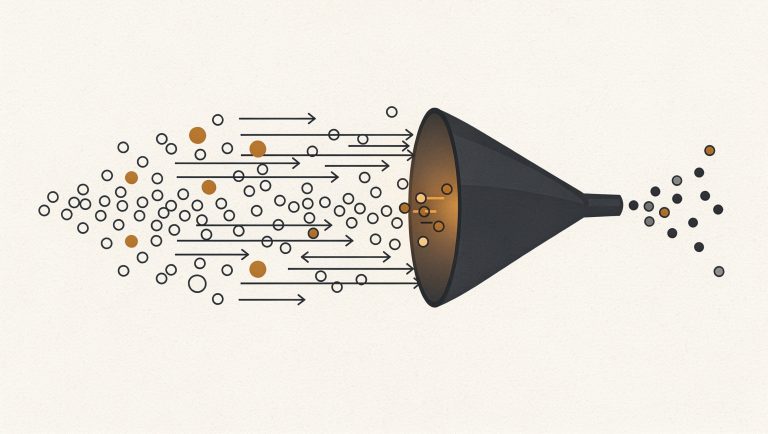
Something shifted in how your buyers find vendors, and most B2B companies have not caught up yet.
Not long ago, a buyer who needed a fractional CMO, a SaaS integration partner, or a professional services firm would open Google, type a query, and scroll through the results. Your SEO strategy was built around that behavior. Your blog posts were written to rank for it.
That behavior is changing faster than most marketing budgets are adjusting. A growing share of B2B buyers now start their vendor research by asking an AI tool, not by searching Google. And when they do, your traditional SEO rankings mean very little. What matters instead is whether the AI has enough confidence in your authority to mention you at all.
This is the gap that Answer Engine Optimization, or AEO, was built to close.
What AEO Actually Means
AEO is the practice of structuring your content and positioning your brand so that AI-powered platforms such as ChatGPT, Perplexity, Google AI Overviews, and Claude select you as a cited source when generating answers for your buyers.
It is related to, but distinct from, traditional SEO. Traditional SEO gets you ranked on a results page. AEO gets you cited in the answer itself, before the buyer ever clicks anything or opens a results page.
The distinction matters more than it might seem. When an AI tool answers a buyer’s question about, say, “what should I look for in a fractional CMO,” the response is not a list of links. It is a synthesized answer with a handful of cited sources woven in. If your name and content are not among those sources, you are invisible to that buyer at the moment they are forming their opinion.
Why This Is a B2B Problem Right Now
The numbers behind this shift are worth sitting with for a moment. According to research from G2, more than half of B2B software buyers now begin their vendor research inside an AI chatbot rather than a search engine, up significantly from just a year ago. That is not a fringe behavior anymore. That is a mainstream buying pattern.
And the AI Overviews that Google has embedded directly into search results are compressing traditional click-through rates dramatically. When an AI summary appears at the top of a results page, the organic result that used to capture meaningful traffic now captures a fraction of it.
For B2B companies that rely on content marketing and SEO to generate awareness and inbound interest, this is a quiet but serious erosion of what used to work.
What AI Tools Actually Look For
Here is the part that most AEO guides get wrong: they treat this as primarily a technical problem. Add schema markup, use question-based headings, format your FAQ section correctly.
Those things help. But they are not the foundation.
AI systems cite sources they have determined to be authoritative. Authority in this context is built the same way it has always been built in content marketing: by consistently publishing content that goes deep on specific topics, that answers real questions your buyers are asking, and that earns recognition from other credible sources in your space.
The technical layer matters, yes. But a brand with shallow content and perfect schema markup will lose to a brand with genuinely useful, comprehensive content every time.
For B2B companies, this means the content strategy that wins in an AI-first search environment is not that different from the content strategy that wins in traditional SEO. The difference is in the specificity and depth required, and in the importance of being present across multiple channels where AI systems look for signals.
The Three Things That Determine Whether AI Cites You
There are three factors that consistently show up in which sources AI tools reach for when generating answers.
The first is topical authority. AI systems look for sources that have demonstrated sustained expertise on a topic, not just a single good article. If you have published one post about fractional CMOs and your competitor has published fifteen, the competitor is more likely to be cited, even if your single post is technically excellent.
The second is content structure. Content that is organized to answer specific questions clearly, with headings that match how buyers actually ask things, is easier for AI systems to extract and synthesize. This is where the technical side of AEO actually matters.
The third is external recognition. When other credible sites link to your content, when your brand is mentioned in industry publications, and when your name appears consistently across multiple platforms, it signals to AI systems that you are a recognized voice in your category. This is why AEO cannot be addressed by content strategy alone.
What to Do About It
The practical path forward for most B2B companies is not a complete overhaul. It is a sharpening of what you are probably already doing.
Start with your core topics. Pick the two or three subjects where you want your brand to be known as the authoritative voice. Build a cluster of content around each one, covering the topic from multiple angles and buyer questions rather than just the surface level.
Write for the question, not just the keyword. Think about the specific questions your buyers ask at each stage of their decision. AEO rewards content that answers those questions directly and completely, in language that matches how the question is asked.
Earn presence beyond your own site. Guest contributions, mentions in industry roundups, strategic partnerships that generate links, and a consistent presence on LinkedIn all contribute to the external signal profile that AI systems use to assess authority.
And do not abandon traditional SEO. The two strategies are not in competition. Ranking in the top ten results for a keyword is still a prerequisite for many AI systems to read your content at all.
The Bigger Picture
B2B buyers are not waiting for marketers to catch up to their new research habits. They are already using AI tools to shortlist vendors, form first impressions, and decide who is worth a conversation.
The companies that invest now in building genuine topical authority, a well-structured content library, and consistent external presence will be the ones AI tools reach for when answering questions from their ideal buyers.
The ones that wait will find the gap harder to close with every month that passes.
If you want to understand what your current content and authority profile looks like relative to where your buyers are searching, a strategy conversation is the right starting point.